About YoungScoring
YoungScoring wasn't born in a consulting firm or on a startup roadmap. It was born from an Excel file opened every evening on the living-room table.
A tool built by a developer for his therapist wife, then shaped session after session by clinicians who actually practise schema therapy. Here is the story, the foundations, and the team behind YoungScoring.
How it started
David Preti is the founder of YoungScoring. A software developer and entrepreneur, he has built several SaaS products for Swiss professionals. He is not a therapist — and it matters to say that plainly.
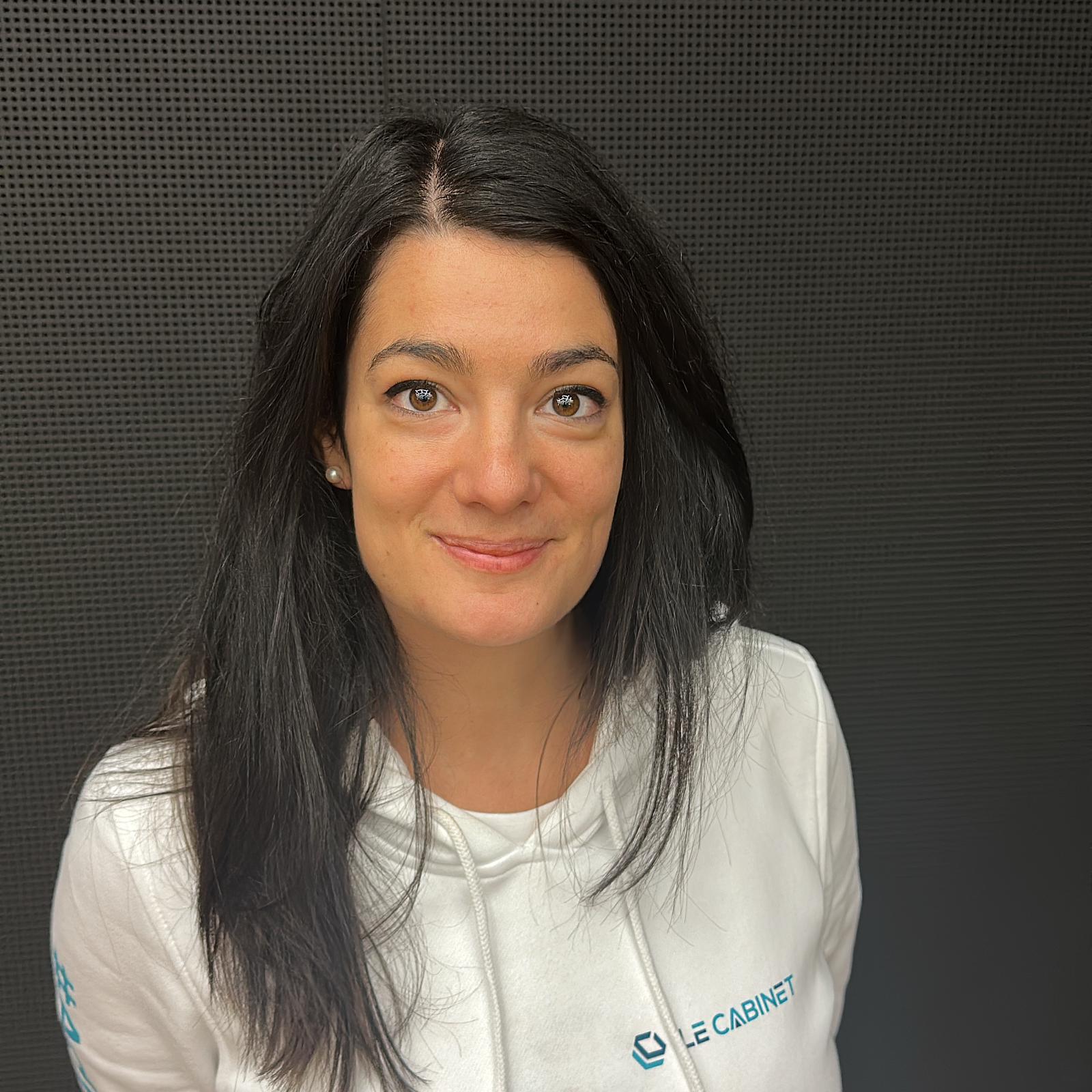
His wife, Marta Preti, is a psychotherapist in Lausanne. She practises schema therapy and regularly uses the YSQ-L3 (Young Schema Questionnaire — Long Form 3, 232 items) with her patients. For months, David watched her repeat the same ritual after every session: open an Excel file, key in all 232 answers one by one, recompute the scores, format a PDF for the patient file. Start again the next day.
The turning point came one evening, watching her do it: "there has to be a better way than this." Not to replace her clinical work — never — but to give her back the mechanical minutes she was losing between sessions.
The first version was built in 2025 for Marta's own use and that of two or three colleagues. It was used, challenged, and corrected under real conditions. After several clinical iterations — including version 2.1 in 2026, which introduced the distinction between primary and secondary schemas — YoungScoring went into public production.
Marta now appears as a testimonial on the home page. We would rather own that connection publicly than hide it: it is precisely because the tool grew out of a real clinical need, lived day to day within a couple, that it makes sense.
Clinical foundations
YoungScoring relies on no in-house model. The tool is built entirely on the established theoretical and psychometric framework of schema therapy, and stays connected to the clinical community.
The instrument is the Young Schema Questionnaire — Long Form 3 (YSQ-L3): 232 items, 18 early maladaptive schemas across 5 domains. Scoring preserves item-level granularity (items rated 4, 5 and 6) and distinguishes primary from secondary schemas.
Marta Preti attended the Inspire 2026 Congress in Thessaloniki (May 2026), an international event of the schema therapy community. That presence keeps YoungScoring in direct contact with practitioners and with clinical developments in real time.
- Young, J. E., Klosko, J. S. & Weishaar, M. E. (2003). Schema Therapy: A Practitioner's Guide. New York: Guilford Press. — Core theoretical framework.
- Young Schema Questionnaire — Long Form 3 (YSQ-L3). 18 early maladaptive schemas, 5 domains, 232 items.
- Arntz, A. & Jacob, G. (2017). Schema Therapy in Practice: An Introductory Guide to the Schema Mode Approach. Wiley-Blackwell.
- Bamelis, L. L. M. et al. (2014). "Results of a multicenter randomized controlled trial of the clinical effectiveness of schema therapy for personality disorders." American Journal of Psychiatry, 171(3), 305–322.
- International Society of Schema Therapy (ISST) — the field's learned society. schematherapysociety.org
Our stance: assist, never replace
"YoungScoring does not automate clinical interpretation. That is deliberate."
What the tool automates is the calculation: the 18 schema scores, item-level granularity (thresholds 4 / 5 / 6), the primary / secondary distinction, and the formatting of the report. The mechanical work, in other words.
Interpretation stays with the clinician — always. The PDF report does not reduce clinical reading to an automatic verdict. On the contrary, it provides more readable raw data, not less, so the practitioner keeps all the material their analysis requires.
This philosophy comes from a defining piece of feedback received during the design of version 2.1, from a practitioner who contributed to it: "too much automation would lead me to neglect this essential point." We took that literally.
Compliance and data protection
The data YoungScoring handles concerns patients' mental health. It demands the highest level of protection — a condition for the product to exist, not an option.
- Hosted in Switzerland — European datacenters, a deliberate choice for data sovereignty.
- Encryption in transit (TLS) and at rest.
- Compliance with the EU GDPR, the UK GDPR, Switzerland's revised nLPD (2023), Canada's PIPEDA, and Australia's Privacy Principles (APPs).
- Patient export — the PDF report is available at any time, in the office or at the patient's request.
- Deletion — a full GDPR deletion procedure, documented on the admin side.
- No patient profiling — no third-party cookies or behavioural tracking applied to patient data.
- No sharing — patient data is never shared with a third party, never used to train a model, never resold.
The team
For this first version, we simply own the two people who brought the tool to life.
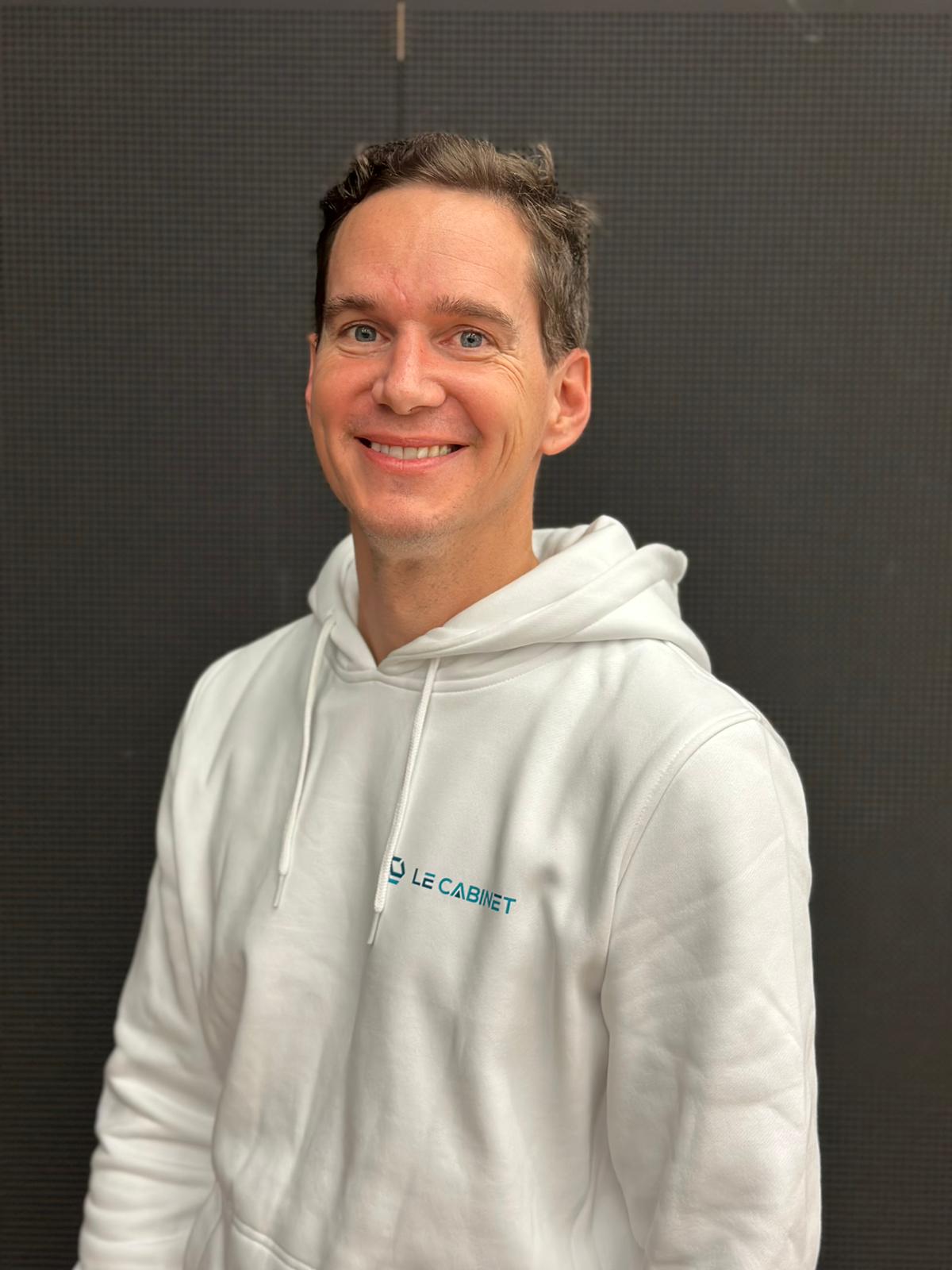
Former software developer, founder of several SaaS products for Swiss professionals — including Le Cabinet (practice management and billing for psychotherapists in Switzerland). Based in Hauterive (Neuchâtel area), Switzerland.
Psychotherapist in Lausanne, first clinical user and permanent clinical advisor to YoungScoring. Attendee of the Inspire 2026 Congress (Thessaloniki, May 2026).
A question? Write to me.
No pitch, no pressure. If you'd like to know more, write to me.